
 USD
USD GBP
GBP
 EUR
EUR

















Which Furniture Manufacturers are Designated by the Shenzhen Government?
Dec 26, 2025


The whiteboards have become essential devices in contemporary offices, classes, and workplaces where they are used as active boards in brainstorming, making presentations, or simply handling daily tasks. Nevertheless, despite the best quality of the whiteboards, they may have formed stubborn stains, ghosting, and discolouration with time unless they are properly maintained. This is why learning how to clean a whiteboard properly is crucial to its long life and maximizing its efficiency.
You may have left dry-erase markers uncleaned for too long, experienced permanent marker disasters, or just the daily use of your whiteboard; in any case, with proper cleaning methods, you will be able to restore your whiteboard to its original cleanliness and keep your workspace looking professional.
Learning Whiteboard Surface Materials
Before beginning any maintenance, it is essential to recognize that different whiteboard surfaces require specific care strategies. The material's composition directly dictates which cleaning agents are safe to use without compromising the surface integrity.
The cheapest alternative is the traditional melamine whiteboard with a porous surface, leading to more easily absorbed marker ink and thus to ghosting and necessitating a more accurate deep cleaning than the more expensive ones.
Whiteboards with porcelain or enamel coating provide a high level of durability and stain resistance compared to their porous counterparts because of their glass-like structure, which is non-porous. Still, they again have a higher price tag and can undergo regular maintenance.
Glass whiteboards are the most advanced and the sleekest as they have an ultra-smooth writing surface that ghosts hardly at all. Still, they need to be cleaned with certain cleaning products so that they do not streak and that they stay crystal clear.
Cleaning of the Whiteboard Daily
The most effective strategy for how to clean a whiteboard is to establish a daily maintenance routine. By cleaning the surface regularly, you prevent marker residue from setting in, which makes it much easier to maintain over time.
The after-effect of every application is that by wiping with a clean and dry microfiber cloth or felt eraser, most of the newly applied marker ink is removed, and the pigments are unlikely to attach to the underlying material.
In offices where whiteboards are used frequently, the policy of having the team members wipe down the board at the culmination of each meeting or shift guarantees that no residues of the marker will be left overnight, during which most ghosting issues start to occur.
Also, by washing your whiteboard eraser now and then with warm water and a little mild dish soap, you can remove all the old marker dust, and this way will not leave the old ink when spread again on your freshly cleaned surface, thus preserving the effectiveness of the eraser and boosting the lifespan of your whiteboard.
Necessary Cleaning Solutions and Methods
Where frequent erasing fails to eliminate stubborn marks or ghosting, it would be important to know how to clean a whiteboard using appropriate cleaning solutions that would help in restoring the board to its writing surface without leaving irreparable marks.
Commercial whiteboard cleaning sprays that are specifically designed to be used on a dry-erase surface are convenient and efficient, usually containing either isopropyl alcohol or other mild solvents that dissolve marker ink, but do not leave a residue or spoil the protective coating of the board.
In the case of an economical self-made decision, the combination of water and white vinegar (or isopropyl alcohol (rubbing alcohol of at least 70% concentration)) on a microfiber cloth is effective in dissolving the marker's pigment and is quick to evaporate without leaving behind any streaks or damaging moisture.
For the best result, spray your cleaning solution directly onto a clean microfiber cloth rather than the whiteboard itself. Wipe the marker residue using consistent circular motions, then follow up with a dry section of the cloth to remove moisture and prevent water spots.
Eradicating Stubborn Stains and Permanent Marker
Among the most popular whiteboard disasters is the fact that someone has accidentally picked up a permanent marker, rather than a dry-erase marker, but knowing how to clean a whiteboard when such emergencies happen could help you avoid the appearance of a board that has been irreparably damaged.
The unexpectedly useful way of solving the problem is to rub over the permanent marker stains with another new dry-erase marker because the solvents in dry-erase markers dissolve permanent ink, and both are wiped off with a clean cloth or regular whiteboard eraser.
For stubborn stains or deep-rooted 'ghosting' that resist standard cleaners, a small amount of hand sanitizer or acetone-based nail polish remover can be effective. Apply the solvent to a cotton ball and gently rub the affected area to break down tough residue. Because these are potent solvents, use them sparingly and always perform a spot test on an inconspicuous area first to ensure the whiteboard’s coating remains undamaged.
It is necessary to apply a stronger cleaning solution, followed by wiping the entire surface with a damp microfiber cloth, and finally drying it completely to eliminate any chemical residue that may affect the subsequent adhesion of the marker or lead to inconsistent performance of a marker.
Recommendation
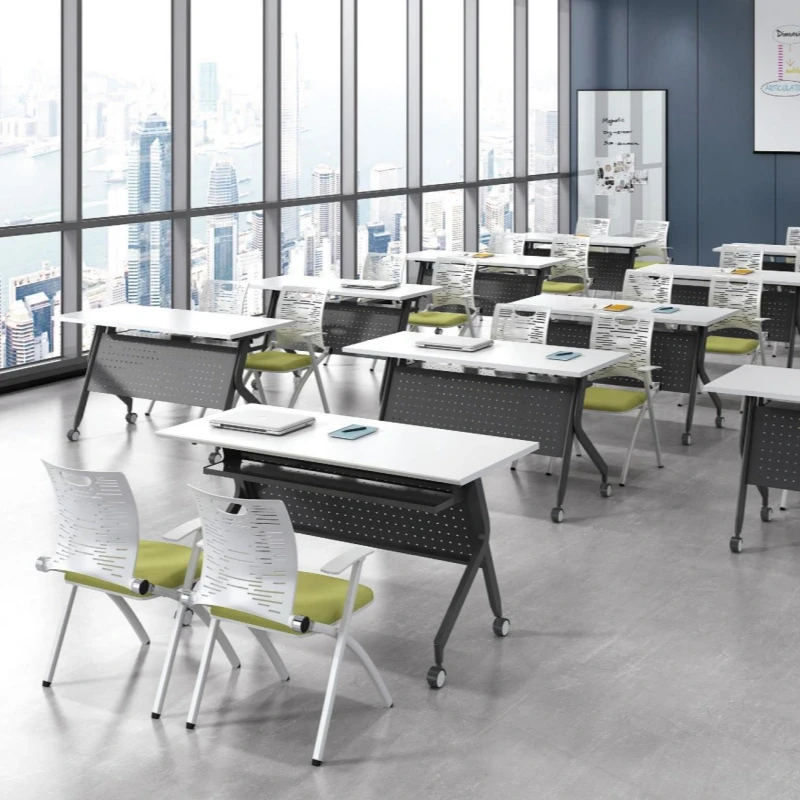
When high-end office layouts and premium presentation are top priorities, partnering with specialized providers ensures your workspace consistently reflects a standard of excellence. Guddorfiss provides a wide variety of office furniture, such as modern meeting rooms and training rooms with built-in whiteboard systems to fulfill the modern vision of the working environment, in addition to offering the convenience of easy-to-clean surfaces.
Subscribe To Our Newsletter
You Can Get The News Of Our Products
SIGN UP
Contact Info
support@Guddorfiss.com
Payment Methods