
 USD
USD GBP
GBP
 EUR
EUR



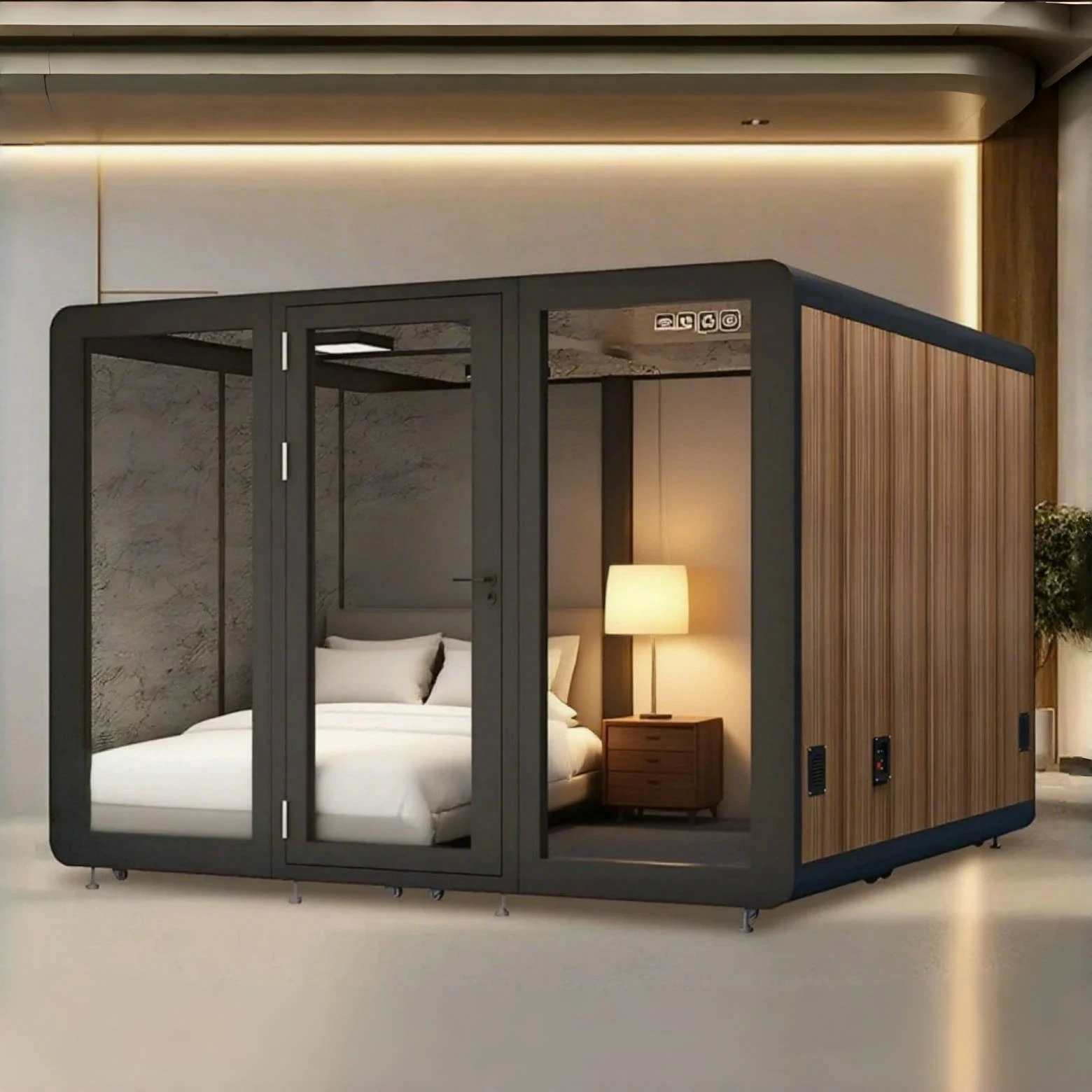







First, bedroom feng shui is an important part of residential feng shui. Here are 14 things to avoid in bedroom feng shui:
1. The bedroom should ideally be square or rectangular, and not slanted or multi-angled.
Hypothetical edges can easily create visual illusions, and multiple angles can easily create a sense of oppression, thus increasing a person's mental burden. Over time, this can easily lead to illness and accidents.
2. Bedrooms should be bright during the day and dark at night:
Bedrooms should have windows to allow for air circulation and natural light during the day, which can make people feel refreshed. At night, windows should be fitted with curtains to block out outdoor light and make it easier to fall asleep.
3. Bathrooms and toilets should not be converted into bedrooms:
In modern buildings, plumbing is installed as a whole, so all the bathrooms and toilets in the building are located in the same place. If a bathroom or toilet is converted into a bedroom, it will inevitably result in sleeping between bathrooms and toilets on the floors above and below. Bathrooms and toilets are inherently damp and unclean places, and being sandwiched between them will inevitably affect environmental hygiene. In addition, the noise from the toilets and water pipes upstairs will definitely disturb your peace and quiet, thus harming your physical and mental health.
4. The room door should not face the main entrance:
The bedroom is a place for rest and needs to be quiet and private, while the main entrance is a place where family and friends must pass through. Therefore, a bedroom door facing the main entrance does not meet the requirements for a quiet bedroom. A main entrance directly facing a bedroom door can easily affect health and wealth.
5. The bedroom door should not face the bathroom directly:
Bathrooms are places for excretion and are prone to producing foul odors and moisture. Therefore, if a bathroom is directly opposite a bedroom door, it will affect the air quality in the bedroom and be harmful to one's health.
6. The bedroom door should not face the kitchen directly or be adjacent to the kitchen:
The fumes and smoke from cooking in the kitchen can easily affect the door of a room directly opposite it, harming health and causing instability in work performance. Since the kitchen is a place of fire and is very hot, it is also not advisable to have it adjacent to a bedroom, especially if the bed is against the wall where the stove is located.
7. Mirrors should not face the bedroom door:
Mirrors have a reflective function, and in Feng Shui, they can reflect negative energy back, thus blocking evil influences. However, if a mirror faces the bedroom door, it will reflect negative energy into the bedroom, bringing bad luck.
8. Mirrors and floor-to-ceiling windows should not face the bed:
Mirrors are used to ward off evil spirits by reflecting negative energy back, so they should not face the bed. Especially when people wake up from sleep and are not fully conscious, they are easily startled by their reflection in a mirror or floor-to-ceiling window.
9. The bed or headboard should not face the bedroom door directly:
When sleeping, safety, quiet, and stability are paramount. Since the bedroom door is the only way in and out of the room, it should not face the bed or its headboard. Otherwise, the person sleeping in the bed may feel insecure and it could harm their health.
10. The head of the bed should not be placed directly against the window:
Windows are where energy enters and exits, so placing the head of the bed close to a window can be considered inauspicious. Because the person sleeping in the bed cannot see the window above their head, they may feel insecure, experience mental stress, and negatively impact their health.
11. The head of the bed should not be under a beam:
The ceiling should be flat and free of beams. Beams can create a feeling of heaviness, especially when sleeping under one, which can cause immense pressure, mental oppression, and negatively impact health and career.
12. It is taboo for the head of the bed not to be against a wall:
When lying flat, it's difficult to see what's above your head, so the head of the bed should ideally be against a wall to avoid an open space that reduces feelings of security. Otherwise, the person sleeping in the bed may become mentally confused and paranoid, affecting their health and career.
13. The bed should be raised off the ground:
The bed surface should be about 50 centimeters off the ground, and the space under the bed must be kept clean and free of clutter. Being off the ground and free of clutter allows for proper airflow under the bed, reducing the penetration of ground moisture into the mattress and thus minimizing its impact on health.
14. It is not advisable to place too many plants in the bedroom:
Too many flowers and plants can easily accumulate yin energy, and since plants absorb oxygen and release carbon dioxide at night, they can easily affect people's health.
Second, what is a suitable size for a bedroom in a residence?
Those who know a little about feng shui know the saying: "A large house with few people is an unlucky house."
The logic is simple. For example, in a 10-square-meter room, installing a one-horsepower air conditioner will cool the room down in half an hour, after which the air conditioner can stop cooling for a while. Because the space is small, the energy is quickly saturated. In other words, the smaller the space, the less energy is needed. However, if you put that same one-horsepower air conditioner in a 100-square-meter house, it will be ineffective. Even though the air conditioner keeps cooling, the room temperature still won't reach the desired level.
In fact, we humans are also energy bodies, emitting light and heat. If we were to use a person to represent a one-horsepower air conditioner, the larger the house, the more energy it would consume. Therefore, the size of a house must be proportional to the number of people living in it. In other words, the larger the house, the more people should live there; what we often refer to as a house with a vibrant atmosphere.
In Feng Shui, it's often said that a house absorbs the energy of its inhabitants. This is absolutely true. The energy emitted by the human body is what we call "human energy." When a person uses so much energy to fill the space of a large house, the damage to their body is self-evident. Excessive energy consumption naturally weakens the body, leading to lethargy at work, impaired judgment, and a host of misfortunes.
If we were to enter the Yangxinzhai (Hall of Mental Cultivation) and the study and bedroom behind the study of Emperor Yongzheng in the Forbidden City in Beijing, we would be surprised to find that the emperor's living space was not much larger than that of ordinary people, only about ten square meters. The "dragon bed" was also no larger than that of ordinary people, and when sleeping, two curtains had to be drawn in front of the bed, making the space even smaller, probably less than 10 square meters.
The Forbidden City is the world's largest imperial palace, covering an area of 720,000 square meters and containing a total of 9,000 rooms (980 palace buildings with 8,707 rooms still exist). But why were the emperor's living quarters so cramped? In reality, the emperor's physical condition wasn't much better than that of an ordinary person. To conserve energy and achieve health and longevity, he too had to live in a small space. Similarly, in the ten famous gardens of Suzhou and the four famous gardens of Guangdong, we can find that the bedrooms of the wealthy and powerful were also very small, only about ten square meters.
The above analysis suggests that a suitable bedroom size is around 15 square meters, and ideally should not exceed 20 square meters. In terms of light, a good size is one where sunlight can directly reach halfway onto the bed; this indicates a suitable area and a balanced layout where yin and yang are evenly distributed.